




Hair transplants often feel like a modern cosmetic breakthrough, but the science behind them is actually quite straightforward. The procedure is based on how certain hair follicles behave differently depending on where they grow on the scalp.
For many people, especially those dealing with early or advanced hair loss, this treatment offers a long-term solution rather than a temporary fix.
If you are considering a receding hairline hair transplant, understanding the science behind it can help you feel more confident about the process and results.
Why Hair Loss Happens in the First Place
Hair loss is usually linked to genetics and hormones.
The most common cause is androgenetic alopecia, often called male pattern baldness. It affects both men and women, although the pattern of thinning is different.
In most cases, hair around the temples and crown becomes weaker over time. This leads to a gradually receding hairline and thinning density.
A receding hairline hair transplant targets these areas by restoring hair where follicles have become inactive or lost.
However, the key point is that not all hair on the scalp behaves the same way.
The Concept of Donor Dominance
The science behind hair transplantation is based on something called “donor dominance.”
Hair follicles taken from the back and sides of the scalp are genetically resistant to balding. Even if they are moved to another area, they continue to behave the same way.
This is the foundation of a successful receding hairline hair transplant.
Once these follicles are transplanted into thinning areas, they retain their resistance to hair loss. This is why results can last for many years.
The concept is simple but powerful. Healthy follicles keep their original genetic programming even after relocation.
How Follicles Are Extracted
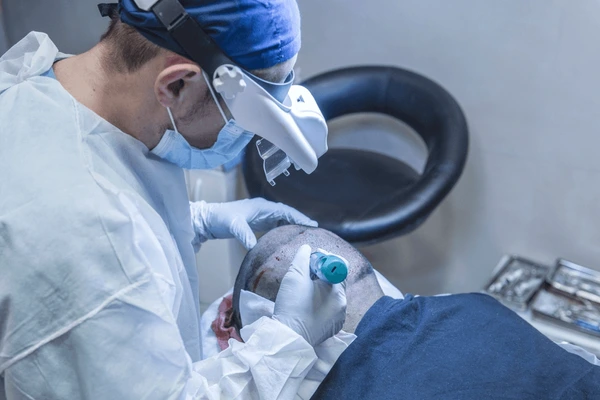
Modern hair transplantation uses precise techniques to remove individual follicles.
The most common method is FUE, or Follicular Unit Extraction. This technique removes hair grafts one by one from the donor area.
During a receding hairline hair transplant, surgeons carefully select strong, healthy follicles to ensure long-term survival.
Each graft contains one to several hairs depending on natural grouping.
The goal is to extract without damaging surrounding tissue or weakening the donor area.
This precision is what makes modern procedures minimally invasive compared to older methods.
What Happens After Implantation
Once follicles are extracted, they are prepared for implantation.
Each graft is carefully placed into the thinning or bald areas of the scalp.
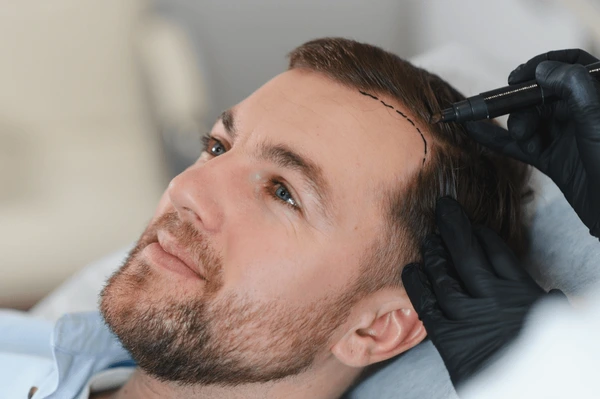
In a receding hairline hair transplant, placement is especially important because the hairline frames the face.
The angle, direction, and depth of each graft must match natural growth patterns.
After placement, the follicles begin to settle into their new environment.
Blood supply gradually reconnects to support healing and future growth.
The Healing Process at a Cellular Level
After surgery, the body immediately begins repairing the treated area.
Tiny scabs form around each graft as part of the healing process. This protects the follicles while new blood vessels develop.
During a receding hairline hair transplant recovery, this stage is essential for graft survival.
Over the next few weeks, the follicles enter a resting phase.
This is a normal biological response known as the telogen phase.
It may appear as if the hair has stopped growing, but the follicles are still active beneath the skin.
Why Shedding Happens After Surgery
One of the most surprising stages for patients is temporary shedding.
A few weeks after a receding hairline hair transplant, transplanted hairs often fall out.
This is known as “shock loss,” and it is a natural part of the process.
The follicle remains alive under the skin, even though the visible hair shaft sheds.
This happens because the follicle resets its growth cycle after being moved.
New hair will begin to grow from the same follicle in the coming months.
The Growth Cycle Explained
Hair growth follows a natural cycle with three main stages.
First is the anagen phase, where hair actively grows. This is the longest stage.
Then comes the catagen phase, where growth slows and the follicle prepares to rest.
Finally, there is the telogen phase, where hair sheds before a new cycle begins.
A receding hairline hair transplant essentially resets this cycle.
Once transplanted, follicles re-enter the anagen phase after a short resting period.
This is why results take several months to become visible.
When New Hair Starts to Appear
New growth usually begins around three to four months after surgery.
At this stage, hair may look thin or uneven.
For a receding hairline hair transplant, this early growth is an important sign that the follicles are active.
Over time, these hairs become thicker and stronger.
By six to nine months, visible improvement becomes much more noticeable.
Full results often take up to twelve months or longer to develop completely.
Why Angle and Direction Matter Scientifically
Natural hair does not grow in a straight uniform pattern.
Each follicle has a specific angle and direction of growth.
During a receding hairline hair transplant, surgeons replicate these natural angles carefully.
This is not just artistic skill. It is based on how hair emerges from the scalp at a biological level.
Incorrect angles can make transplanted hair look unnatural or uneven.
Proper alignment ensures that new hair blends seamlessly with existing strands.
The Role of Blood Supply in Success
Blood circulation plays a crucial role in transplant success.
After implantation, grafts rely on surrounding tissue to reconnect blood flow.
This process is called angiogenesis, where new blood vessels form around the follicles.
A successful receding hairline hair transplant depends on strong vascular support in the scalp.
Good blood flow helps follicles survive and begin producing healthy hair again.
This is why careful handling during surgery is so important.
Why Donor Hair Remains Permanent
One of the most interesting scientific facts is that donor hair retains its characteristics permanently.
Even after being moved, it continues to behave as it did in the original location.
This is why a receding hairline hair transplant can provide long-lasting results.
The follicles are genetically programmed to resist hair loss.
However, surrounding native hair may still thin over time if not treated or managed.
This is why long-term planning is essential.
Factors That Affect Scientific Outcomes
Several biological and technical factors influence success.
These include follicle health, scalp condition, surgeon skill, and aftercare quality.
A well-executed receding hairline hair transplant depends on balancing all these elements.
Poor handling of grafts or incorrect placement can reduce survival rates.
That is why experienced clinics focus heavily on precision and timing.
What Real Patients Often Experience
Many patients notice similar stages during recovery.
Initial redness and scabbing are followed by shedding, then gradual regrowth.
Reading receding hairline hair transplant reviews often shows how consistent this timeline is across different individuals.
Most patients describe the process as slow but predictable.
Understanding the science helps reduce anxiety during early stages.
Final Thoughts
A hair transplant is not just a cosmetic procedure. It is a carefully planned biological process based on how hair follicles behave, survive, and regenerate.
If you are considering a receding hairline hair transplant, understanding the science behind donor dominance, growth cycles, and healing can help you make a more informed decision.
Reading real receding hairline hair transplant reviews can also help you understand what to expect at each stage of recovery.
When performed correctly, the science works in your favour, creating natural, long-lasting results that blend seamlessly with your existing hair.